
Natalie Beisswanger
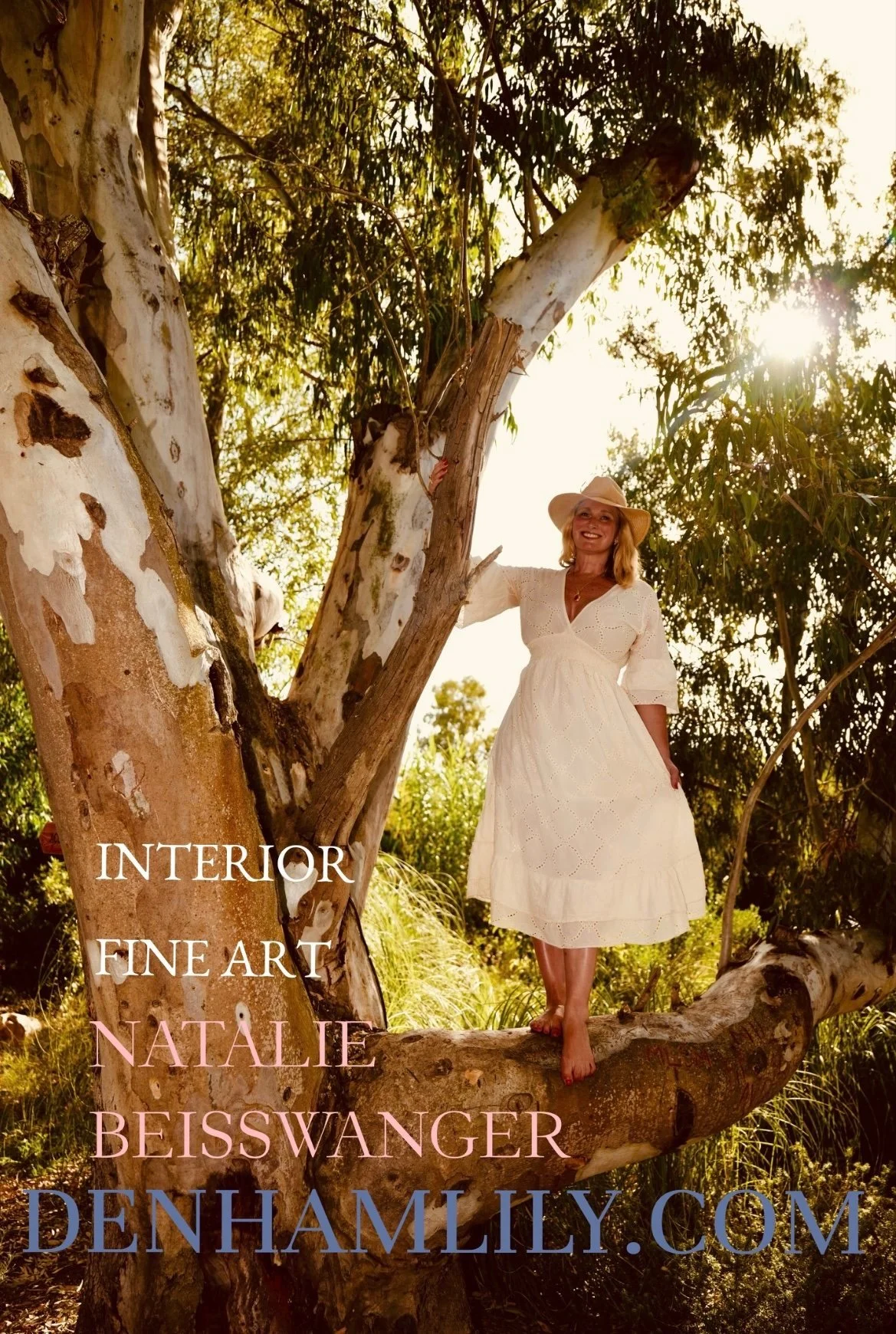
Natalie Beisswanger’s art quietly bridges the worlds of nature, science, poetry and emotion. She describes her work as emotional ecology, a way of exploring how people can reconnect with the natural world through gentle, thoughtful images and heartfelt poems. Rather than loud statements, her work offers space to pause, to look closely, and to feel something real.
Her relationship with nature started early. "As a child, I’d draw flowers with faces, rabbits and birds," she says. "It was my way of making them come alive, of turning them into companions."
That sense of connection never left. Today, she continues to imagine animals as beings with presence, voice, and emotion, part of a long artistic tradition where nature reflects something human. Like in the paintings of Caspar David Friedrich, where quiet figures gaze into misty landscapes, her animal subjects often return the viewer’s gaze, asking for attention and empathy.
She focuses on animals not just in terms of how they look, but how they live and how they’re affected by the world around them. "I imagine giving animals a voice, bringing them to life," she explains. Her drawings highlight the delicate lives of native Australian species, many of which are at risk due to habitat loss. While her work connects with the legacy of natural history artists like Maria Sibylla Merian or John James Audubon, her approach feels different. Her art is not just scientific, but personal and emotional.
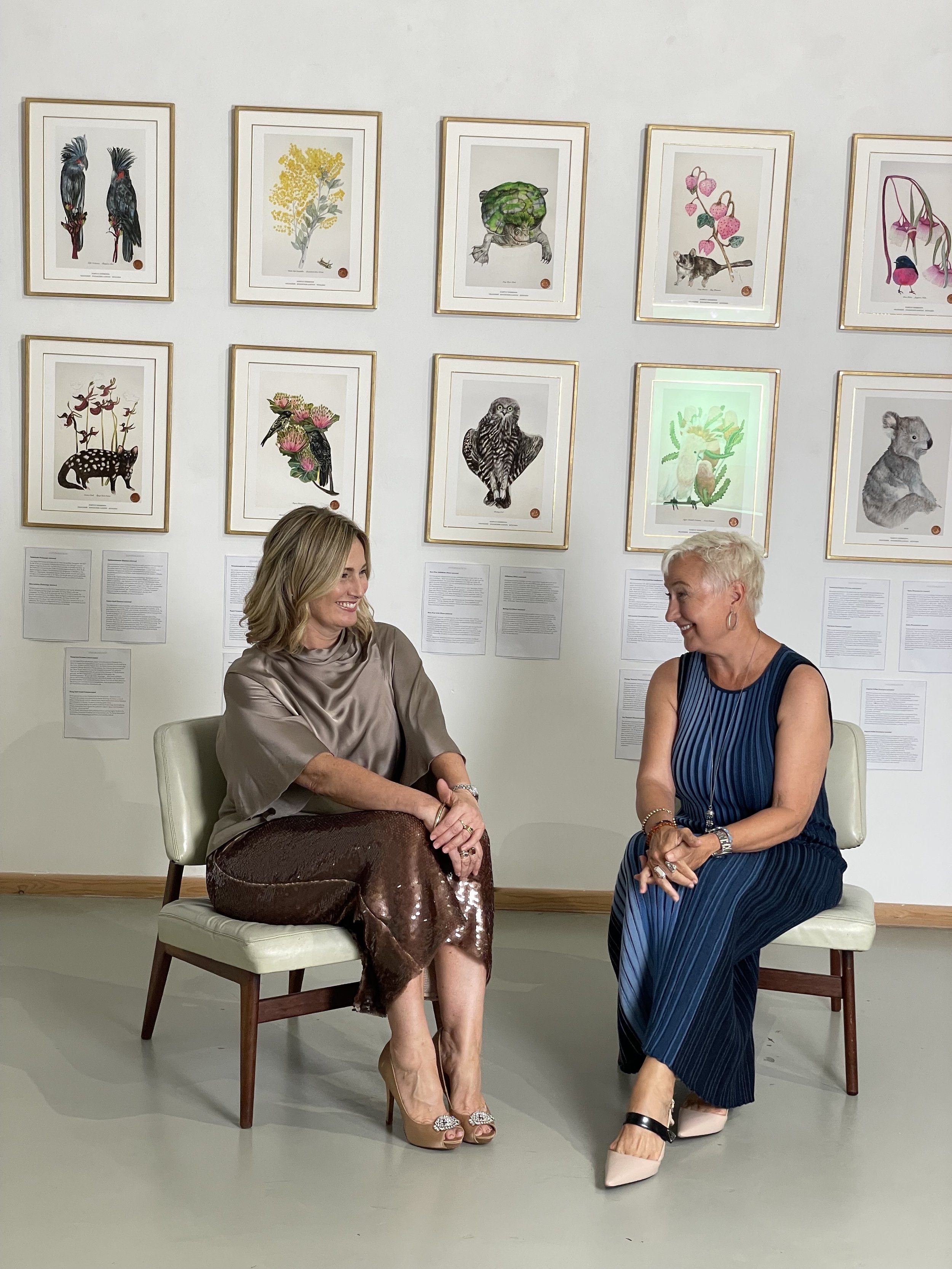
The Habitat series is at the center of her recent work, accompanied with information by biologist Dr. Elisabeth Brandt. After traveling through Australia on her own, Natalie Beisswanger spent time observing the landscape and its wildlife, documenting what she saw through sketches, photographs, and film. Back in the studio, she began creating detailed drawings of each species. Each week, they focused on one animal, combining scientific research with artistic interpretation. "It’s a way to honor these beings," she says, "and to imagine how they might thrive or struggle in changing environments."
The result is a kind of still storytelling, scenes where animals meet, share space, or simply exist beside one another, each one part of something larger. Her images are delicate and captivating, yet they hold more than just beauty. Beneath their quiet elegance lies a gentle but pressing urgency. "I believe art should do something to you," she says. "I want people to feel something, and then wonder why they feel that way." Her work shares a spirit with artists like Ernst Haeckel, Maya Lin, and Agnes Denes, who combine art with environmental thinking. But her voice is softer, more intimate. "My message isn’t loud," she says. "It’s a whisper, but one that goes straight to the heart."
She is also developing a natural history book on Australian species that brings together drawing, science, poetry and storytelling. Her aim is to inspire a sense of care and attention across cultures and generations. "I want Australians to treasure their native species," she says, "and I want Europeans to rethink their relationship with nature." At a time when many people feel disconnected or overwhelmed, her art invites a different pace. It encourages us to slow down, look more closely, and remember that we are part of the natural world. With a delicate eye and unwavering focus, Natalie Beisswanger offers a gentle reminder that stillness, care, and attention are powerful tools for change.
A life journey for the Arts.
Australian Artist Natalie Beisswanger was born in Melbourne on December 30, 1972.
From early childhood, Natalie was happiest creatively drawing from her own imagination. Natalie’s first signature was a rabbit. This rabbit was drawn hidden under chairs and inside cupboard doors. It was her symbol for connecting into her own world of creativity.
Spirit animals have played roles in Natalie’s work from the very beginning, and continue all the way through to her most recent works.
Natalie’s enthusiasm for practicing art was encouraged by her father Ron, although he never aimed to become a professional artist himself, even though he demonstrated enormous talent. Natalie observed her father’s habits with plein air painting, and subsequently her own painting style evolved.
Natalie graduated successfully T.O.P Art and Design at Huntingdale Technical school in Melbourne in 1990, and led into further studies in Textile & Fashion Merchandising at R.M.I.T into her twenties, she then formed an art group in St. Kilda, Melbourne. Members of this group participated weekly in life drawing sessions in a large open studio connected to the Linden gallery.
Natalie was very much involved in the running of other artists’ activities and group art exhibitions at this time, including an art residence working under the supervision of a reputable art restorer, Dr. Edmund Valentin in Hawthorn, Melbourne.
She also lived and worked in Florence, Italy for two years, developing a painting portfolio which was inspired from roaming the world seeking knowledge & sampling a diversity of languages and cultures.
She then moved to Munich, Germany in 2002. Natalie established herself from the beginning with an art studio and began proactively taking on commissions for paintings and illustrations, for a worldwide base of collectors. Clients are choosing art pieces based on her private portfolio of landscapes, portraits and animals in a variety of mediums.
In recent years, inspired by her own children, Natalie has passionately written and directed several pantomimes for children’s theatre groups, also taking on work involving painting magnificent scenery for theatre backdrops as well as the making of ornate costumes and set designing. Natalie continues to reside close by the inspirational English Garden in Munich, with her native German husband Rolf and their two daughters Frida and Grace.
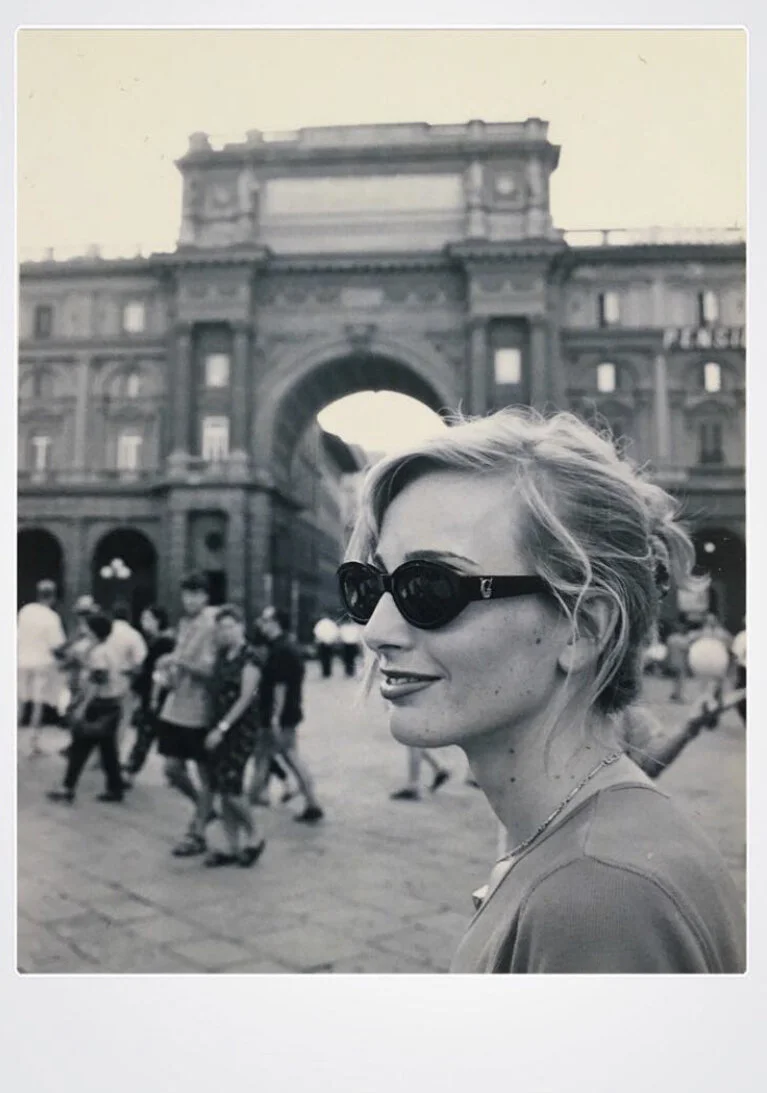
Florence, Italy
1997
About the diversity of my work.
A natural sense of baroque beauty & style. Feel for the feminine, the playful, the innocent, the child, the female observer – present, open, inviting and joyous.
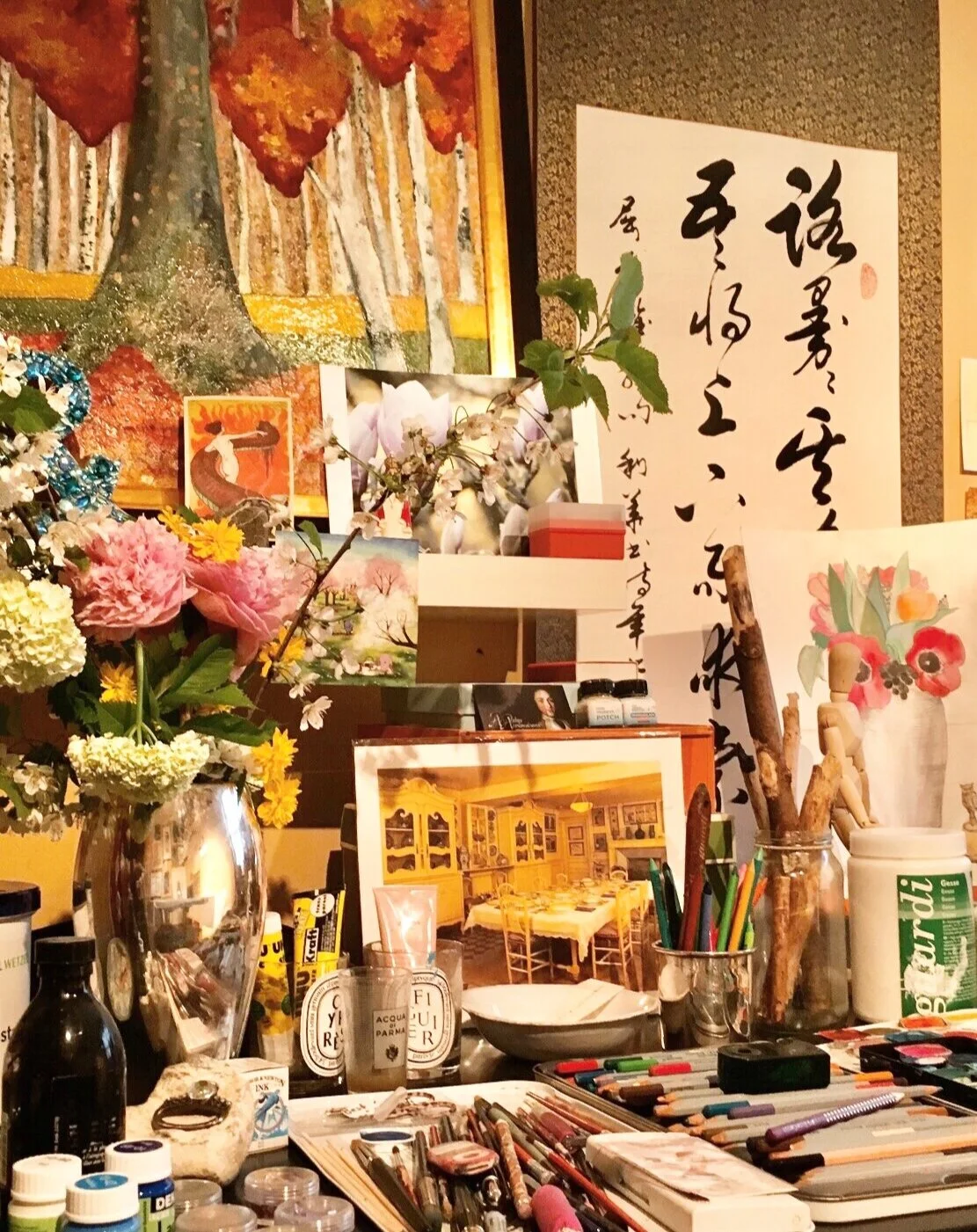
Natalie’s works are intimate observations - people, places, beautiful inanimate objects – exquisite observations of beauty with true creative connection and exploration – conveyed in a mix of mediums from illustrative series of works all of which begin with a light touch of a pencil inviting a flow of originality - moving into oils, acrylics, water colours, pastels, ink paintings , eventually arriving reaching a milestone developing her signature with unique flower collaging illustration & design work.
Alongside making art, a constant focus on character development using photography to create a narrative body of work, leading into storytelling with mixed media film making, advancing forward into 3D innate paper sculptures for costumes, and writing character studies related to theatre projects.
Creative Ideas, Real Impact.
A conversation between Natalie Beisswanger and
Dr. Andrea Seehusen, IAM - International Arts Management

Foundation & Artistic Identity
How did you came to art—was there a specific turning point or influence?
1
Art has been my companion since childhood, where I'd draw nature with a twist - flowers with faces, rabbits, and birds. It was a way to bring them to life and make them feel like friends.
How would you describe your practice in your own words?
2
My art practice is a way to liberate the wild, free spirit within me. Through poetry and visuals, I aim to give voice to the natural world and the creatures that inhabit it.
What role does nature or biodiversity play in your work?
3
My work is deeply rooted in exploring the fascinating world of Australian wildlife and the impact of habitat loss. Through my collaboration with Dr. Elisabeth Brandt, I've created detailed illustrations and accompanying poems that bring scientific insights to life for audiences of all ages. I'm also captivated by the 'what if' – would these incredible species thrive or struggle in new habitats?
Creative Process & Materials
What does your creative process look like?
1
My creative process for 'Habitat' began with an immersive safari experience in Australia, capturing photos, films, and sketches of animals and plants. I then refined my sketches into classical, beautiful prints with a fine art printer. Collaborating with Dr. Elisabeth Brandt, we worked on one species per week, combining my illustrations with her scientific insights. I use high-quality Arches linen paper, layering ink and pencils to create detailed, lifelike illustrations that aim to bring the subject to life – as if it could fly off the page.
Do you work in series, or do your pieces emerge more intuitively?
2
I work on individual pieces with a vision to create a cohesive narrative. Each illustration is crafted to fit into a larger collage, where I carefully cut and compose the elements to convey wildlife interactions within a stylized human habitat. It's a meticulous process, but one that allows me to create unique, handcrafted artworks that tell a story.
What materials or techniques are essential to your practice?
3
My practice relies on a combination of mental preparation, discipline, and lifelong honing of my craft. While pencils and paper are my primary tools, it's my commitment and experience that enable me to bring my vision to life. This project has actually taught me to balance my free-spirited nature with a more structured approach, which has been a valuable growth experience.
Conceptual & Emotional Layers
Your work has been described as “theatrical and intricate”—how do you approach composition and storytelling?
1
I approach composition and storytelling by deeply connecting with my subjects, often feeling a mystical bond with them. I imagine bringing them to life, and their eyes becoming a conduit to the audience's heart. It's about capturing their essence and projecting it in a way that resonates with viewers, almost like giving them a voice and spotlight.
What kinds of emotional responses do you hope to evoke in your viewers?
2
I hope my art evokes a sense of wonder and curiosity, inspiring viewers to value urban green spaces and the wildlife that inhabits them. I'd like to spark a deeper appreciation for coexistence and the importance of balancing technology with nature, encouraging people to reconnect with the world around them.
Is there a recurring symbol or motif in your work that holds personal meaning for you?
3
My rosy-cheeked ghost symbolizes the soul of wildlife and represents my personal connection to nature. It brings a sense of humor and love to my work, allowing me to infuse my creativity with a deeper sense of connection and meaning.
Ecology & Ethics
You align your work with environmental and biodiversity themes—how do you balance beauty with urgency?
1
I balance beauty with urgency by creating intriguing subjects that draw viewers in, allowing them to connect emotionally. By partnering with experts like Dr. Brandt, I strengthen the narrative behind each piece. My approach whispers a message of conservation, rather than shouting it, letting the heart absorb the importance of protecting our natural world.
How do you see art contributing to conversations about conservation or sustainability?
2
I hope my art inspires Australians to value their native lands and wildlife, and prompts European communities to rethink their values and actions towards conservation. By introducing them to lesser-known species, I aim to spark curiosity and urgency, encouraging a global call to action to protect our planet as one shared home.
Career & Community
What have been some meaningful exhibitions or collaborations in your career so far?
1
Two notable projects stand out in my career. Firstly, a highlight was producing a screenplay for a school festival in Munich, Germany, in 2016. The film explored the importance of diplomatic relations, communication skills, and environmental respect. Through a dreamlike narrative, we showed children the value of empathy, cooperation, and leadership. This project was a meaningful way to engage the community and promote positive values.
Secondly, my proposal for waterlilies in the Englischer Garten Munich led to a surprise opportunity - a two-week solo exhibition, "Bloom and Flow," which was a huge success. This exhibition paved the way for future collaborations, including a permanent exhibit with the Australian Adina hotel chain.
How do you see your role as an artist within the broader art world?
2
As an artist, I invite people of all cultures and ages to engage with my work, which explores the intersection of nature and soul. I'm excited to bring a fresh voice to the art world, one that emphasizes emotional ecology and the interconnectedness of all living things.